Places to see
The falls, peaks and temples people come for. None of these are booked through us — they are here so you know where you are going.
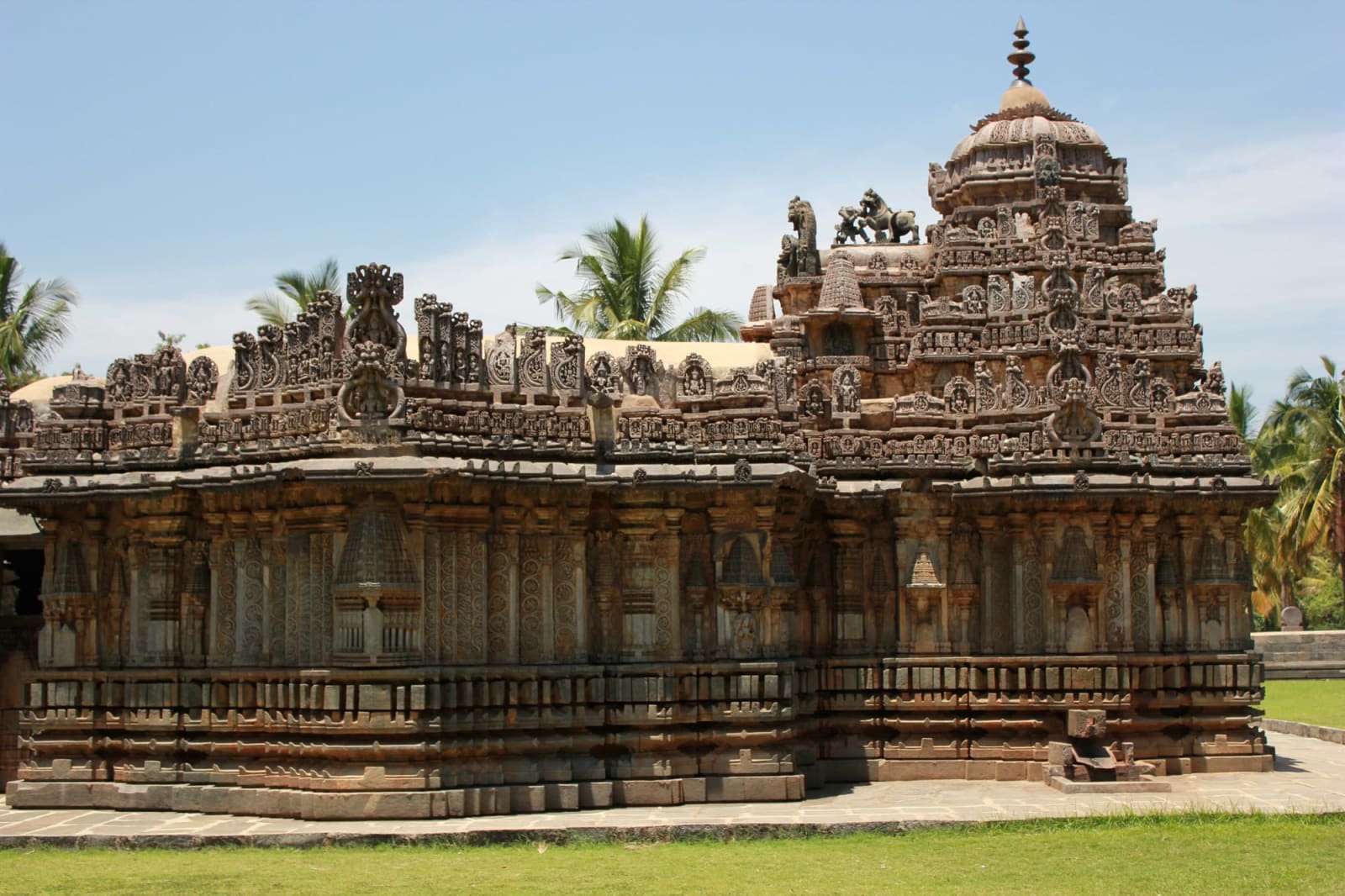
Amruteshwara Temple, Amruthapura
Temple · Tarikere
A Hoysala temple of 1196, built by Amrutheshwara Dandanayaka, a commander under Veera Ballala II, in a quiet village north of Tarikere. Smaller than Belur or Halebidu and almost never crowded, which is the point: you can take your time over the 140 panels that run round the outer hall wall — the Ramayana on the south side, Krishna and the Mahabharata on the north — and the lathe-turned pillars inside. The Bhadra reservoir is ten minutes away for the sunset afterwards.
Free
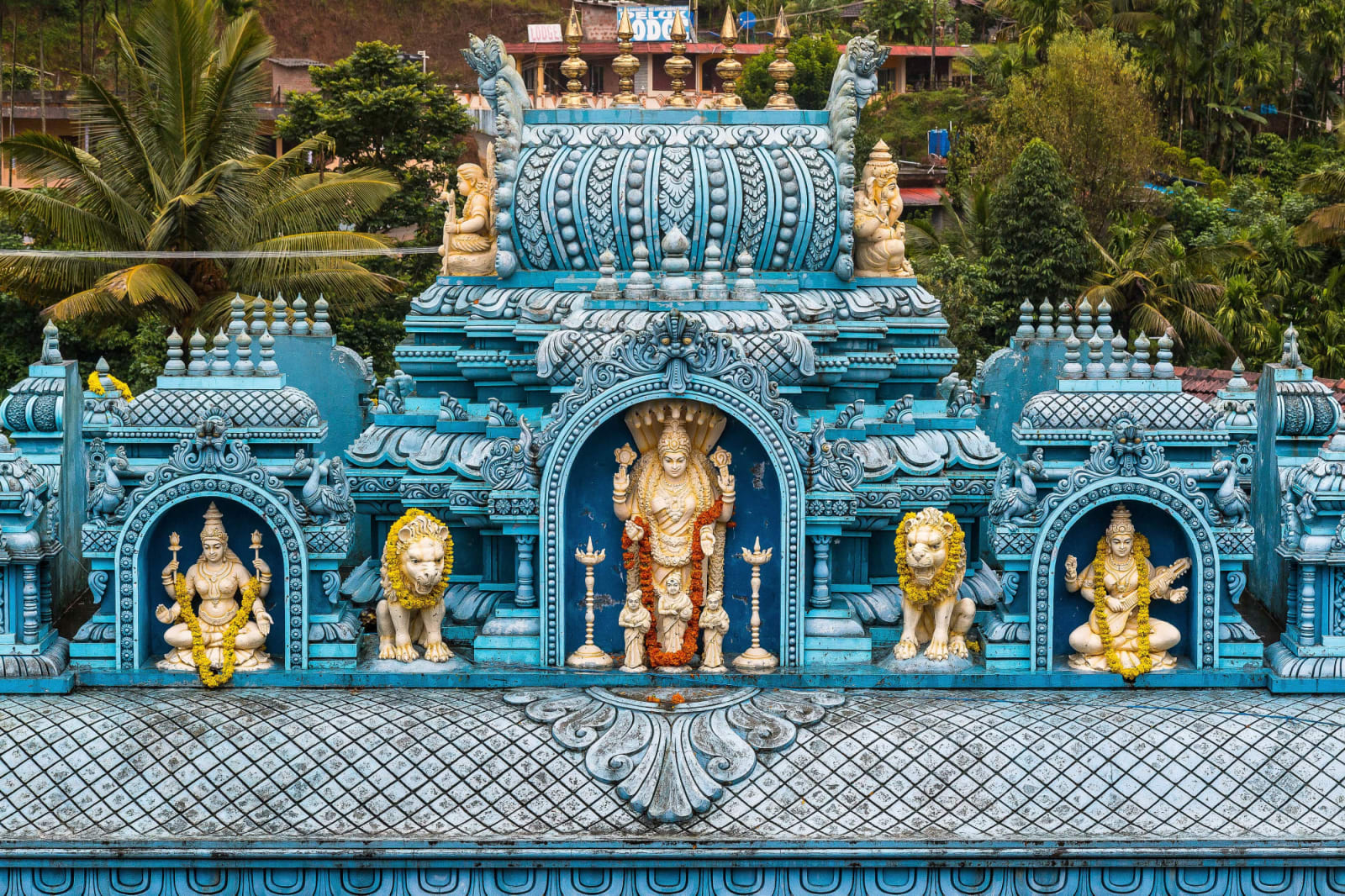
Horanadu Annapoorneshwari Temple
Temple · Mudigere
A temple to the goddess of food, deep in the Bhadra valley below the Kudremukh range. What draws people is not the architecture, which is modern, but the rule of the house: nobody who comes is allowed to leave hungry. Free meals are served to every visitor all day in a hall that seats hundreds, and pilgrims may stay the night. The drive in from Kalasa through areca gardens and paddy is one of the prettiest in the district.
Free

Kalasa and the Kalaseshwara Temple
Temple · Mudigere
A small temple town on the Bhadra, the base for Kudremukh, Horanadu and the Kyathanamakki hills. The Kalaseshwara temple sits on a rise above the river, an old stone shrine with a Dravidian shikhara and a wooden mantapa in the Malnad style. Kalasa itself is worth an hour: a bridge over the Bhadra, a market that sells estate coffee and honey, and every trekking permit office within walking distance.
Free

Sringeri Sharada Peetham
Temple · Sringeri
The first of the four mathas established by Adi Shankaracharya, on the bank of the Tunga. The Vidyashankara temple beside it is a 14th-century Hoysala–Vijayanagara hybrid whose twelve zodiac pillars catch the sun month by month. Tame carp fill the river at the steps.
Free

Veera Narayana Temple, Belavadi
Temple · Chikkamagaluru
One of the largest Hoysala temples, and the one most visitors have never heard of, in a village said to be the Ekachakranagara of the Mahabharata. Built around 1200 under Veera Ballala II: three shrines face a long pillared hall 103 feet across, so the plan is unusual and the effect is of a temple far bigger than its footprint. The carving is restrained by Hoysala standards and the stone is in remarkably good condition. Halebidu is 11 km on, so the two pair well for a day of temples.
Free